How to Grow Parsley Indoors (the Herb Already in Nine Other Guides)
Parsley turns up in nine other guides on this site and has never had its own. Variety choice, slow germination, and growing it as an annual instead of fighting its biennial clock.

Parsley shows up all over this site without ever getting its own guide. It’s in the container depth table, the germination chart, the east-window recommendations, and the temperature guide — always as a supporting example, never as the main subject. That’s partly because parsley doesn’t demand much once it’s growing. The parts that actually trip people up are the slow, patchy germination and a life cycle that quietly ends in flowering if you let a pot run too long.
Slow to start
Germination commonly takes two to four weeks — slower and less even than almost any other herb on this site. That’s the seed, not your technique.
Middle-of-the-road light
Not as shade-tolerant as mint or chives, not as sun-hungry as basil. An east-facing window is the usual sweet spot.
Biennial, grown as an annual
Left alone past a year, parsley bolts to flower and the leaves turn bitter. Most growers resow before that happens rather than waiting it out.
Flat-leaf, curly, or Hamburg: three plants sold as “parsley”
| Type | Grown for | Notes |
|---|---|---|
| Flat-leaf (Italian) Best for cooking | Leaf, used fresh or cooked | Stronger flavor than curly types and holds up better in hot dishes. The usual choice if you only grow one. |
| Curly | Leaf, mostly as a garnish | A denser, more compact plant that looks tidier in a small pot — milder flavor, prized more for looks on a plate than taste in a dish. |
| Hamburg (root parsley) Different crop | Root, parsnip-like | Same species, grown for an edible root rather than the leaf. Needs a genuinely deep container and a much longer season — not a drop-in swap for the other two. |
General varietal description, not a side-by-side grow comparison on this site.
Flat-leaf and curly are interchangeable in how you grow them — same light, same water, same timeline. Hamburg parsley is a different proposition entirely and isn’t really what the rest of this guide is about; it’s included here mainly so you know it exists before accidentally buying root parsley seed expecting a leaf herb.
Light: an east window, same as the rest of this site’s “gentle” herbs
Parsley sits in the same light bracket as chives and cilantro in this site’s window direction guide — grouped under east-facing windows, which get gentler, cooler morning sun rather than the all-day blast a south window gives basil or rosemary. It isn’t as shade-tolerant as mint or chives on a north-facing sill, but it doesn’t need or particularly want the hottest spot in the house either.
A clip-on grow light works the same way it does for any herb here: it won’t change what parsley needs, just how reliably you can give it, especially through winter when a window alone often isn’t enough.
Starting point: seed, a nursery pot, or a grocery-store clump
| Starting point | Time to first real harvest | Effort |
|---|---|---|
| Divided grocery-store or nursery pot Fastest | A week or two to settle in, then harvest lightly | Low — split the dense pot, repot the sections |
| Seed, started in cells and transplanted | 2–4 weeks to germinate, then several more weeks to a full harvest | Moderate — slow, often uneven germination |
| Seed, direct-sown in the final pot | Same germination timeline, slightly less transplant stress | Moderate — fine either way, since parsley tolerates transplanting better than cilantro does |
General timing based on how each starting method establishes the plant, not a measured comparison.
A grocery-store parsley pot is usually dozens of seedlings crammed into one plug, the same overcrowding problem covered in growing basil from a supermarket pot. Water it well, then tease or cut the root ball into two or three sections and repot each into its own container — it’s the fastest route from “store-bought and already dying” to a pot that actually lasts.
Seed is slower but cheaper, and the main thing to plan around is patience: parsley seed is notoriously slow to germinate, commonly two to four weeks, and comes up unevenly even under good conditions. Gardener’s Path and several other growing guides recommend soaking the seed in water for about 24 hours before sowing to soften the hard seed coat — a widely repeated tip that can meaningfully shorten the wait, though it won’t make germination fast or even. Sow about 6mm (¼ inch) deep and keep the pot consistently moist and warm — 65–70°F (18–21°C) — the same depth and temperature range this site uses for cilantro, which germinates faster but otherwise behaves similarly at the seedling stage.
Unlike cilantro, parsley’s taproot tolerates a transplant reasonably well once it has a few true leaves, so starting in cells and moving seedlings to their final pot — the standard method covered in starting seeds indoors — is a fine option here, not just direct sowing.
Flat-leaf or curly parsley seed, or a live starter plant
Search current listings on Amazon Amazon (opens in a new tab, affiliate link)Search link, not a specific listing — a live plant or nursery pot skips the slow germination entirely.
Container and soil
This site’s own container depth guide groups parsley with basil and cilantro at a 5–6 inch minimum, and that’s enough for steady leaf production. If you have the room, going deeper — 8 inches or more — gives the taproot more space and is what Gardener’s Path recommends for the most vigorous growth. Treat 6 inches as the floor, not the ideal, if you’re optimizing for a long-lived plant rather than a quick windowsill pot.
Use an ordinary well-draining potting mix with drainage holes, same as every other herb on this site — see choosing containers and potting mix for what’s actually in the bag and why garden soil doesn’t work well in a container.
Watering and feeding
Parsley wants consistently moist soil and sulks if it dries out completely and repeatedly — closer to cilantro’s preference than to a Mediterranean herb that likes a dry-down between waterings. The finger-test method in how to water indoor herbs and vegetables applies here without modification.
For feeding, University of Minnesota Extension recommends a liquid fertilizer at half the label strength roughly every four to six weeks for parsley grown indoors — a notably lighter schedule than the two-week interval this site’s general fertilizing guide uses as a default for faster-growing leafy crops. It’s the same interval University of Minnesota Extension gives for chives, and parsley is a similarly modest feeder.
Harvesting without starving the plant
- Cut outer, older stems near the base, not from the center — the same cut-and-come-again principle used for lettuce and for chives. New growth comes from the center of the plant, so taking outer stems first keeps the plant productive longest.
- Take no more than a third of the plant at once. Stripping a pot bare in one go sets it back further than a few small harvests spread over the same week.
- Stems regrow from where they’re cut, not from a fresh shoot elsewhere, so cutting right at the base rather than mid-stem gives the most usable regrowth.
The biennial clock: why a pot eventually bolts
Parsley is a true biennial: a first-year plant builds a leafy rosette, and if it survives into a second year, it sends up a flowering stalk, sets seed, and finishes its life cycle. Flavor compounds shift as a plant heads toward flowering — leaves get noticeably more bitter even before any flower stalk is visible, which is the practical reason most growers treat parsley as a one-season herb rather than waiting to see what year two looks like.
The practical fix is the same logic used for succession planting: rather than keeping one pot going indefinitely and hoping it doesn’t bolt, start a new pot well before an older one is likely to decline, so you’re never left with a single aging plant as your only supply.
Common problems
Nothing has come up after a week or two. Normal for parsley specifically — see the germination timeline above. Starting seeds indoors and seedling troubleshooting both flag parsley by name as one of the slower, more patience-testing herb seeds; two to four weeks isn’t a sign anything went wrong.
Leaves turning yellow. Usually watering, not feeding — both a missed watering and a soggy, undrained pot show up as yellowing on parsley. Yellow leaves on an indoor plant walks through telling the causes apart by pattern.
Fine webbing, stippled leaves, or small flying insects. The same general-purpose indoor pests covered in common indoor plant pests — spider mites and aphids most often — can turn up on parsley same as on any other herb.
A tall central stalk with clusters of small greenish-yellow flowers. That’s bolting — see the biennial clock section above. The plant isn’t dying from a problem you caused; it’s finishing its life cycle. Harvest what you want from it and start the next pot.
Frequently asked questions
Is parsley an annual or a perennial? Neither, technically — it’s a biennial. Most indoor growers treat it as an annual in practice, resowing well before a plant reaches its second year and starts heading toward flower.
Can I regrow parsley from a grocery-store bunch, the way scallions regrow? No. Scallions regrow from a kitchen scrap because the root end is intact in a produce bunch; a bunch of cut parsley stems almost never comes with roots attached, so there’s nothing to root in water. A grocery-store potted parsley plant, by contrast, is a real plant you can divide and repot — see the starting-point section above.
Which type should I grow — flat-leaf or curly? Flat-leaf (Italian) has more flavor and is the better choice if you’re cooking with it regularly. Curly is milder and more compact, and some growers keep one pot of each — flat-leaf for the kitchen, curly for garnish.
Does parsley need a grow light? Not strictly, the same way most east-window herbs on this site don’t strictly need one. It grows faster and fuller with supplemental light, particularly in winter, but a decent east-facing window is enough to keep a pot productive on its own.
Where this fits
Parsley follows the same fundamentals as the rest of this site’s herb guides — window direction, container depth, and watering all apply with little modification. The two things that are genuinely specific to parsley are the slow germination, which just needs patience and a soak before sowing, and the biennial clock, which means a pot you’re happy with now is not a pot you should expect to keep forever — plan the next one before this one bolts.
Filed under Herbs. Questions or a correction? Get in touch.
Keep reading
How to Grow Chives Indoors (the Shade-Tolerant Herb Already on This Site)
Chives tolerate the darkest window of any common herb and come back for years. Seed vs. division, light, feeding, and the snip-and-regrow harvest that keeps a clump going.
How to Grow Cilantro Indoors (Without It Bolting in Two Weeks)
Cilantro is the one herb that goes to flower before most people get a second harvest. Cooler light, direct sowing and succession planting are the actual fix.
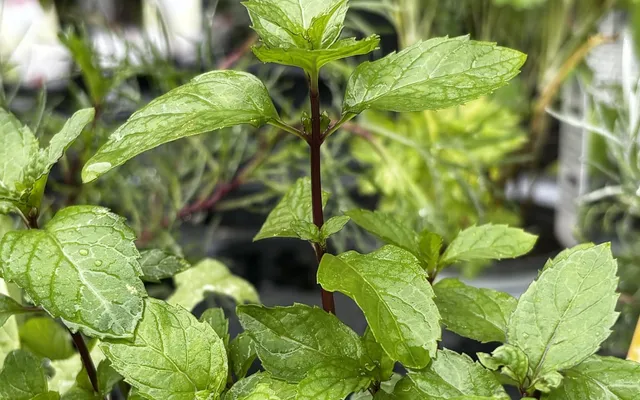
How to Grow Mint Indoors Without It Taking Over
Mint is the easiest herb to keep alive indoors and the easiest to regret planting with anything else. Containment, light, and the propagation trick that gives you endless mint for free.